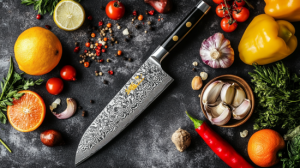

Miyabi Mizu SG2 8″ Chef’s Knife
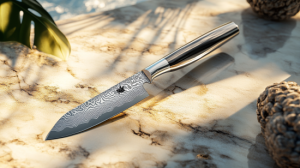
- Micro Carbide powder steel SG2 construction (MC63); core is surrounded with a hammered stainless steel Damascus textured finish
- 63 Rockwell hardness; special Criodur ice-hardening process maximizes properties of the steel
- Traditional Japanese blade hand-honed to a 9 to 12° angle
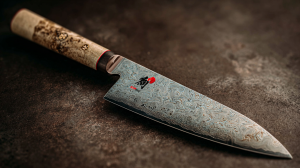
- Micarta D-shape handle, with a mosaic accent complimented by red spacers and a metal end cap with logo
- Handcrafted in Seki, Japan with a lifetime warranty
$219.95
Elevating Your Culinary Experience Through Japanese Blade Mastery
The first time I held a Miyabi Mizu SG2 Chef’s Knife, I knew my relationship with cooking was about to fundamentally change. The weight balanced perfectly in my palm, the handle nestled comfortably against my fingers, and the blade gleamed with a promise of precision I had never before experienced in my kitchen. That was three years ago, and since then, I’ve developed not just an appreciation but something of an obsession with what I now consider the ultimate fusion of traditional Japanese craftsmanship and modern technological innovation.
Let me take you on a journey through everything you need to know before investing in this remarkable culinary tool. Whether you’re a professional chef looking to upgrade your arsenal or a home cook ready to elevate your kitchen game, this comprehensive guide will help you understand why the Miyabi Mizu might just be the last chef’s knife you’ll ever need to buy.
The Heritage Behind the Blade
The story of Miyabi knives begins in Seki, Japan—a city renowned for sword-making since the 13th century. Much like Solingen in Germany or Sheffield in England, Seki represents the pinnacle of blade craftsmanship. The Miyabi brand, now owned by Zwilling J.A. Henckels, maintains this traditional Japanese approach while incorporating cutting-edge materials and techniques.
The Mizu line specifically represents a beautiful marriage between East and West. “Mizu” means water in Japanese, and like water, these knives embody both strength and fluidity. When I first researched these knives, I was captivated by how the craftsmen honor ancient traditions while embracing innovation—a philosophy that resonates with my own approach to cooking.
What Makes the Miyabi Mizu SG2 Truly Special?
The Revolutionary SG2 Steel
At the heart of what makes this knife exceptional is its core material. SG2 (also known as MC63 powdered steel) represents the cutting edge of metallurgical science. Unlike conventional steel, SG2 is a powdered metal that’s sintered—essentially compressed under extreme heat—rather than folded. This results in a micro-carbide structure that’s extraordinarily fine and uniform.
When I explain this to friends, I compare it to the difference between digital and analog photography. Traditional steel is like film—excellent but with visible grain when you look closely enough. SG2 is like a high-resolution digital image—the “pixels” are so fine they create an almost perfect edge.
What does this mean practically? The SG2 core achieves a Rockwell hardness of 63 HRC—significantly harder than most Western knives, which typically range from 54-58 HRC. This extreme hardness allows the blade to maintain an incredibly acute cutting angle of just 9.5-12 degrees per side compared to the 20-22 degrees of traditional Western knives.
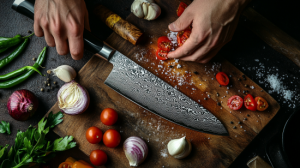
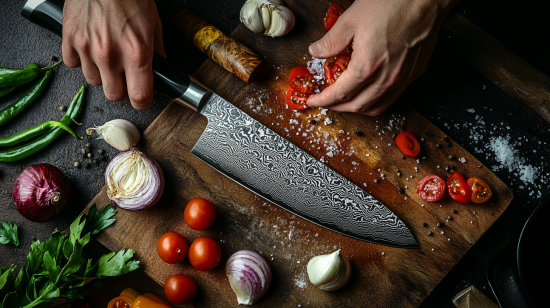
The first time I used my Mizu to slice through a tomato, I was genuinely shocked—the blade passed through with virtually no pressure, leaving perfect, juice-retaining slices that seemed to separate at a molecular level. The SG2 steel core creates an edge so precise it redefines your understanding of sharpness.
The Breathtaking Damascus Pattern
While the core performance comes from the SG2 steel, the visual impact of the Mizu comes from its stunning Damascus cladding. Each blade features 100 layers of steel folded around the SG2 core, creating that distinctive rippling pattern that has captivated blade enthusiasts for centuries.
This isn’t just for show—though I admit to occasionally just staring at my knife in admiration. The Damascus layers provide additional strength and protection for the harder but more brittle SG2 core. It’s functional artistry at its finest.
Under certain lighting, the blade reveals subtle blue undertones—a design choice that honors the “Mizu” (water) theme and creates a truly distinctive appearance that sets it apart even from other premium Japanese knives.
The Perfectly Crafted Handle
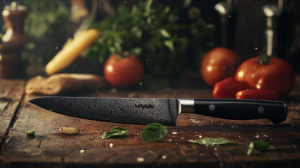
The handle of the Mizu SG2 is crafted from black Micarta—a composite material made from layers of linen, canvas, or paper soaked in resin and compressed under high pressure. The result is a material that’s extremely durable, resistant to water, heat, and chemicals, and won’t crack or warp over time.
When I first held the knife, I was struck by how the D-shaped handle seemed to mold itself to my grip. For right-handed users (sadly, there isn’t a left-handed version), it provides exceptional control and comfort even during extended prep sessions.
The Miyabi Mizu’s handle is secured with a mosaic pin featuring the Miyabi logo—a small detail that demonstrates the attention to craftsmanship present throughout the knife.
The Experience of Using a Miyabi Mizu SG2
Weight and Balance
At approximately 7-8 ounces (200-226 grams) depending on the exact model, the Miyabi Mizu strikes what I consider a perfect balance between the ultra-lightweight Japanese knives and heavier German styles. The knife is balanced slightly forward of the bolster, creating what knife enthusiasts call a “blade-heavy” feel.
I’ve found this balance to be ideal for most cutting techniques. The blade does much of the work for you, but there’s enough heft to power through denser ingredients when needed. After a full day of meal prep, my hand feels far less fatigued than with my previous knives.
Precision in Motion
The 8-inch (20cm) chef’s knife—the most popular size in the Mizu line—features a relatively flat profile toward the heel that curves upward toward the tip. This design facilitates both the push-cutting typical of Japanese technique and the rocking motion favored in Western kitchens.
I still remember the first time I minced herbs with my Mizu. The knife seemed to anticipate my movements, responding to subtle shifts in pressure and angle with remarkable intuition. It wasn’t just cutting—it was a conversation between chef and tool, a dance of precision that transformed a mundane task into something approaching art.
Versatility in the Kitchen
While traditional Japanese knives often specialize in specific tasks, the Miyabi Mizu chef’s knife is designed as an all-purpose workhorse. Over three years of use, I’ve employed mine for everything from breaking down chicken and slicing steaks to delicate herb work and precision vegetable cuts.
The blade height provides adequate knuckle clearance for comfortable chopping, while the pointed tip allows for detail work like removing silver skin from tenderloins or creating decorative garnishes. The exceptional edge retention means you can move from task to task without pausing to hone or sharpen.
Comparing to Other Premium Knives
Miyabi Mizu vs. Shun
Both Miyabi and Shun represent the premium end of Japanese cutlery available to Western consumers. Having used both extensively, I find that Shun knives (particularly their Classic line) tend to be slightly lighter with a more pronounced belly curve that favors rocking cuts.
The primary difference lies in the steel—Shun typically uses VG-MAX or VG-10, both excellent but generally not quite as hard as the SG2 in the Mizu. This means the Miyabi can take and hold a slightly sharper edge, though the Shun might be marginally less prone to chipping if mishandled.
In terms of fit and finish, both are exceptional, though I find the Mizu’s handle more comfortable during extended use. Price points are comparable, with both representing significant but worthwhile investments.
Miyabi Mizu vs. Global
Global knives represent a distinctly different approach—their one-piece stainless steel construction and distinctive dotted handles create a modern, minimalist aesthetic that contrasts with the traditional appearance of the Miyabi.
Globals are significantly lighter than the Mizu, which some chefs prefer for agility. However, I’ve found the additional weight of the Miyabi helps with tougher ingredients. The Mizu’s SG2 core also outperforms Global’s CROMOVA 18 steel in edge retention, though the Global is less maintenance-intensive and generally more forgiving of rough handling.
The price difference is considerable—you could often purchase two Global chef’s knives for the price of one Miyabi Mizu. Whether the upgrade is worth it depends on your priorities and cooking style.
Practical Considerations Before Purchasing
The Investment
Let’s address the elephant in the room—price. The Miyabi Mizu SG2 8-inch chef’s knife typically retails between $250-300, placing it firmly in the premium category. Is it worth it? After three years of daily use, my unequivocal answer is yes.
I’ve calculated that I use my chef’s knife for approximately 30 minutes each day—that’s over 500 hours of use over three years. The joy and efficiency it brings to each of those hours makes the initial investment seem increasingly trivial with each passing month.
For perspective, many people don’t hesitate to spend similar amounts on smartphones or other electronics that will be obsolete in two years. A properly maintained Miyabi Mizu will last decades, potentially becoming an heirloom piece that improves your daily life throughout that time.
Care and Maintenance Requirements
The exceptional performance of the Miyabi Mizu comes with responsibility. This is not a knife to toss in a drawer or run through the dishwasher. Proper care is absolutely essential to preserve both the edge and the beauty of this culinary investment.
The high hardness of SG2 steel that enables its remarkable edge retention also makes it somewhat more brittle than softer steels. This means the edge can chip if used improperly—no cutting frozen foods, no chopping through bones, and absolutely no twisting the blade while cutting.
I store mine in a wooden knife block, but a magnetic strip or knife guard would also be appropriate. After each use, I hand wash with mild soap, dry immediately and thoroughly, and occasionally apply a food-safe mineral oil to the handle.
Sharpening Considerations
The good news is that the SG2 steel holds its edge remarkably well. Where my previous Western knives needed honing before each cooking session, my Mizu maintains its sharpness through weeks of regular use. I personally use a whetstone approximately every 2-3 months to maintain the edge, though a honing rod with fine ceramic or glass can be used for touch-ups in between.
For those unwilling to learn whetstone sharpening, this presents a challenge. Many local knife sharpening services aren’t equipped to properly sharpen high-hardness Japanese knives at their specific angles. I recommend either learning to use whetstones yourself (it’s a meditative practice once you get the hang of it) or researching specialized sharpening services in your area that specifically advertise experience with Japanese knives.
Is the Miyabi Mizu Right for You?
For Professional Chefs
If you make your living in the kitchen, the Miyabi Mizu represents one of the finest tools available for your craft. The combination of edge retention, precision, and balance makes it ideal for the demands of professional cooking. The initial investment quickly pays dividends in performance and reduced sharpening maintenance.
I’ve observed that in professional settings, the Mizu tends to become a prized possession that chefs guard carefully—it’s not the knife you loan to the new prep cook. The distinctive appearance also makes it less likely to be “accidentally” pocketed by a colleague.
For Serious Home Cooks
For those who cook regularly at home and appreciate quality tools, the Miyabi Mizu offers professional-grade performance that transforms everyday cooking into a more satisfying experience. If you find joy in the process of cooking—not just the end result—then the tactile pleasure of using such a finely crafted tool adds immeasurably to that experience.
I’ve found that owning a knife of this caliber has actually increased how often I cook at home. There’s a genuine pleasure in using it that makes me look forward to prep work rather than seeing it as a chore.
For Beginners or Casual Cooks
If you’re just beginning your culinary journey or cook only occasionally, the Miyabi Mizu might represent too significant an investment. The care requirements and learning curve associated with proper technique might outweigh the performance benefits for very casual users.
That said, I believe in buying the best tools you can afford, especially those you use frequently. If you’re committed to improving your cooking skills and prepared to learn proper knife care, starting with a knife like the Mizu sets a high baseline that helps develop good technique from the beginning.
Where to Purchase
The Miyabi Mizu SG2 is available from select kitchen specialty retailers both online and in brick-and-mortar stores. Authorized dealers include Williams-Sonoma, Sur La Table, and Zwilling’s official website. You might occasionally find them at higher-end department stores with robust kitchenware departments.
I purchased mine from a specialty knife shop where I could hold it before buying—an approach I highly recommend if possible. The feel of a knife is deeply personal, and being able to test the grip and balance before investing is invaluable.
Be wary of unusually low prices or sellers without established reputations, as counterfeits do exist in the premium knife market. The craftsmanship of an authentic Miyabi is immediately apparent in the details—perfect finishing on the handle, precise hammering patterns, and immaculate grinding of the blade.
The Warranty and Support
Miyabi knives come with a limited lifetime warranty that covers defects in materials and workmanship. This doesn’t cover normal wear and tear, misuse, or damage from improper sharpening—but it does provide peace of mind regarding the fundamental quality of the knife.
In my experience, Zwilling J.A. Henckels (Miyabi’s parent company) maintains excellent customer service. When a friend experienced an issue with the handle of his Miyabi (not a Mizu), the company responded promptly and resolved the situation to his satisfaction.
Final Thoughts: A Lifetime Companion in the Kitchen
After three years of daily use, my Miyabi Mizu SG2 chef’s knife has become more than just a tool—it’s a trusted companion in my culinary adventures. The edge has remained remarkably sharp with minimal maintenance, the handle has developed a subtle patina that tells the story of our time together, and the blade still catches the light in ways that make me pause in appreciation.
What I value most isn’t just the performance—though that remains exceptional—but the way this knife connects me to the food I prepare. There’s something almost meditative about using a tool of such precision; it demands presence and attention, pulling you into the moment and transforming the act of cooking from routine to ritual.
Whether you’re a professional chef seeking the perfect edge or a home cook ready to elevate your daily experience in the kitchen, the Miyabi Mizu SG2 represents not just a purchase but an investment in countless future moments of culinary joy. In a world of disposable conveniences, it stands as a reminder that some things are still made to last a lifetime—and to improve your life every day of that journey.
If you, like me, believe that cooking is one of life’s fundamental pleasures—an act of creativity, nourishment, and love—then investing in a knife that honors the importance of that act is a decision I suspect you’ll never regret.